The Lego Masters phenomenon has brought the idea of 100% customised LEGO projects to the attention of a global audience. LM is a reality series in which talented LEGO enthusiasts compete to build the best project, with local versions filming in several countries around the world. In Australia, fans were recently treated to an outstanding “Grand Masters” series (S5, 2023), which saw the return of various former finalists (and some wild-cards) coming back to compete in some of the most challenging scenarios yet. The builds created during this best-of-the-best season were par excellence.
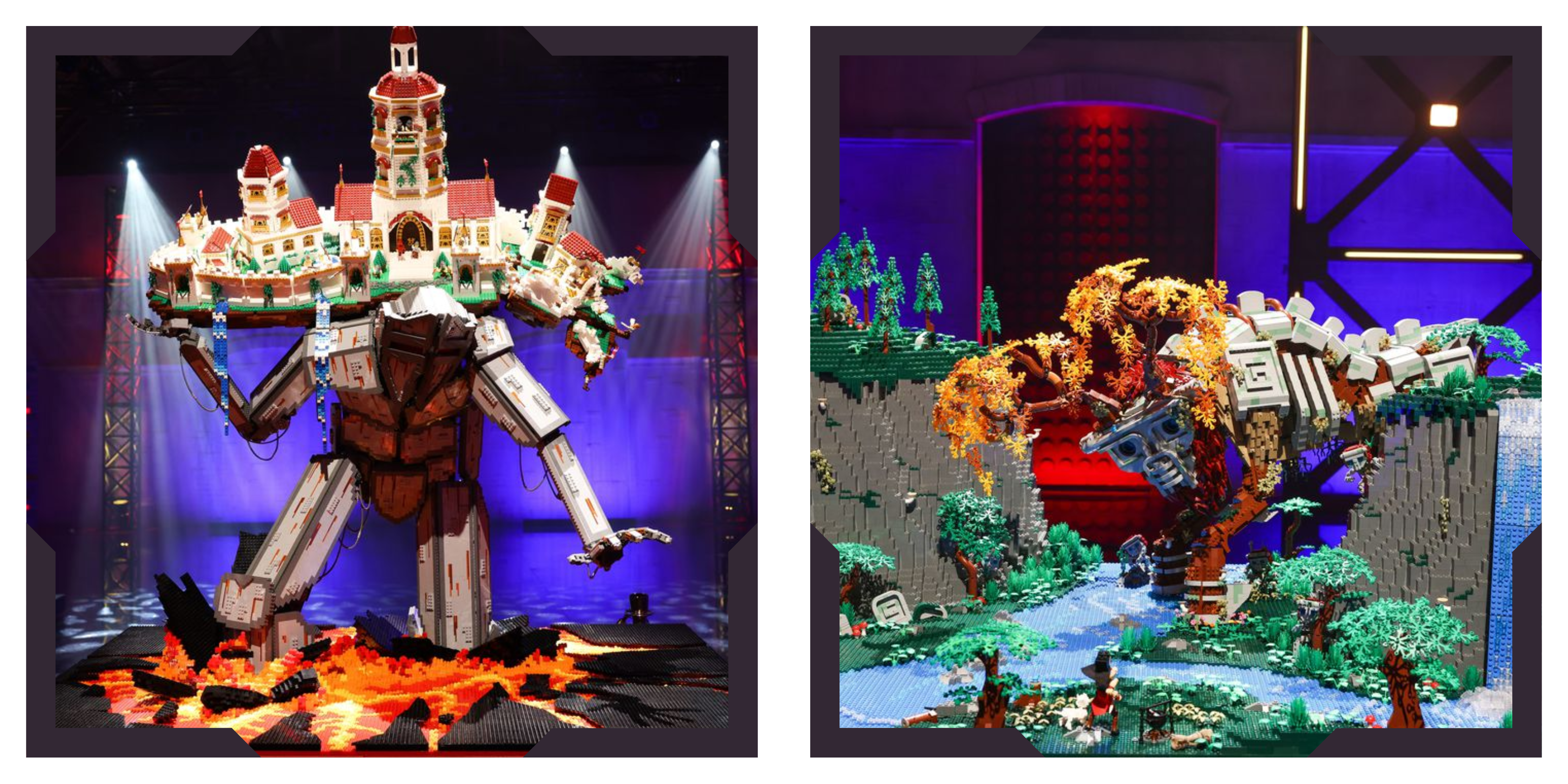
[Images sourced from https://9now.nine.com.au/lego-masters/gallery]
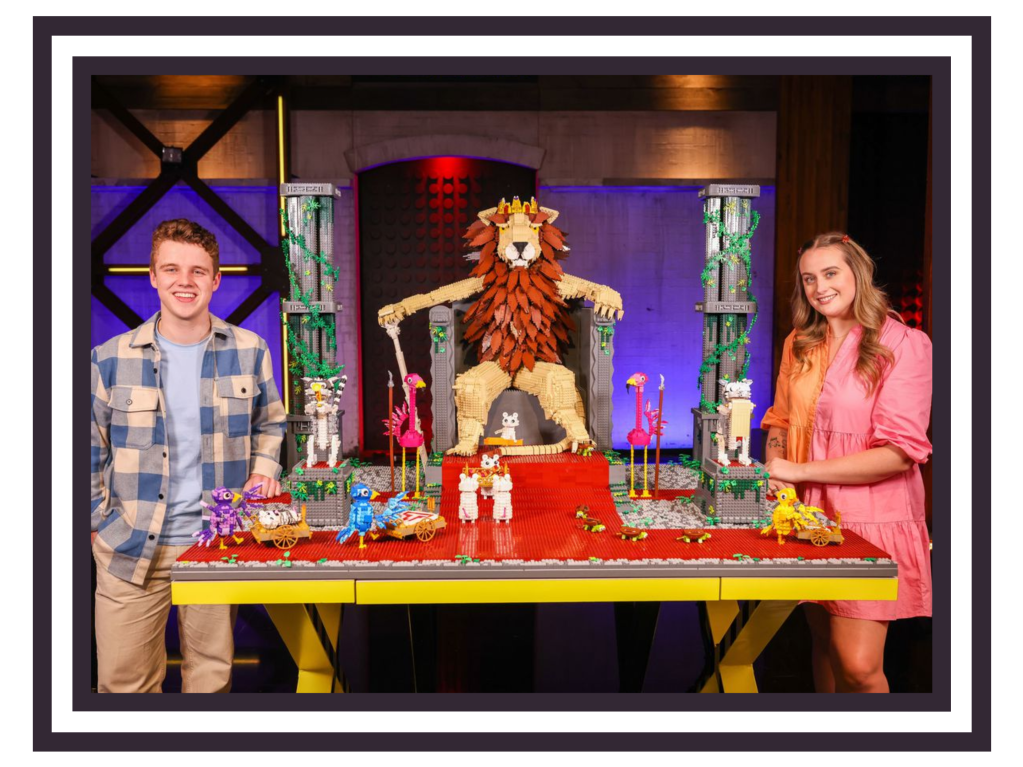
Grand-Master competitor Alex, coming into her first LM season, had described herself as “just a set-builder”. Across two seasons, her growth as a LEGO builder – and that of her partner in (cat)crime, Caleb – was one of the most marked of the series. Like pre-LM Alex, I’m essentially a set builder. However, as I progress further into my LEGO hobby, my imagination has begun to spawn various ideas for My Own Creations (aka. “MOCs”). But materialising these ideas into something tangible – a physical, brick-built model – takes more than just idle daydreaming. Accordingly, my question in this article is this: How does someone evolve from being “just a set-builder”, who has only built from official LEGO instructions, to successfully learning to create their own builds from scratch?
I recently reached out to Alex to ask her this very question and she generously shared some insights from her time on LEGO Masters AU:
“I think that you learn SO many techniques from doing sets, and you really don’t gather how much you really are learning from them until you are put into an environment in which you need to DO it, or go home. LEGO is just a particular medium of art, over time you just get used to using that medium. You learn different pieces and connections. You have amazing team mates that help you with things you get stuck on.”
[Image sourced from https://9now.nine.com.au/lego-masters/gallery]
Over two blog posts, we explore some ideas that can help a set builder along the path to becoming a MOC builder. “PART 1: The Play Paradigm” focuses on builder mindset, and “PART 2: Pathways & Barriers” surveys the tactics and issues of becoming a MOC builder. In its entirety, this article provides a conceptual framework in which to embed your own personal MOC journey. As we’ll discover, Alex’s advice is on point – playing around with set building unquestionably lays the foundation for using LEGO bricks and parts as a creative medium for making artwork. And, reaching out to others for help when you need it, is entirely consistent with the LEGO Brand Framework. So, read on to delve deeper into the transformation from LEGO Set Builder to LEGO MOC Creator.
PART 1: The Play Paradigm
A salient observation to begin with, is that children are often expert MOC builders (in their own way) and their innate playfulness is fundamental to this capability. Whilst some young builders are committed to following an instruction set as precisely as possible (perhaps with some adult assistance), many others are equally committed to completely disregarding the instructions and creating whatever takes their fancy, with reckless abandon. (It matters little to the child immersed in their stash of bricks whether or not anyone else can decode their unique build – that it has meaning to them is itself enough). Both these styles of play can benefit the builder’s development; they are by no means mutually exclusive, and neither is superior to the other – they are simply different approaches to satisfying the various creative needs, preferences and abilities of diverse individuals.
Specifically, following pre-determined rules (instructions) enables a young builder – and novice builders of any age – to learn about different parts and how they connect together, and provides practice templates of functional builds that can be emulated independently in the future. Through this scaffolding, official set builds provide excellent training for brick mastery. Next, free-form building is powerful too, because it embraces experimentation and tolerance, and frames failure as learning. This self-directed, open-ended, and reflective approach can teach brick mastery in a different way and pace (than set building) but it also nurtures outside-the-box thinking and self-expression in builders (of any age and experience level). The set builder might develop technical skills faster, but the free builder more deeply develops the mindset of an inventor, with an irrepressible playfulness powering their creative activity.
Unfortunately though, as adults, we often tend to lose much of the playfulness of our childhood. (Things are serious now, we have responsibilities, and society is judging us). Whilst more knowledgeable and skilful in our technical ability than younger builders, adult biases can inhibit our openness to entertain “silly” (carefree) play in our lives – to the detriment of our creative expression. Because, as adults, we are accustomed to following rules, processes and procedures, following a set build is a comfortable experience. Alternatively, deviating off-plan to build from our imagination becomes potentially threatening, discouraging wary builders from its pursuit. A fear of failure drives this apprehension; the risk of failing is a powerful deterrent in an achievement-driven society (that venerates success as the paramount measure of a person’s worth). There are at least a couple of factors fuelling this fear.

A meme that arose in the LEGO fan community, post “The Lego Movie”. Silly play versus serious play? You decide. [Image Edit: BRICKOCENTRIC]
First, because play has traditionally been regarded as the province of children, engaging in play in adulthood breaks a societal norm, and hence undermines our (perceived) legitimacy as successful adults. Consider, for example, the common stigma of an adult playing video games as their preferred leisure activity. Now, contrast this instead with the adult participating in a competitive sport, for instance, which is characterised as a well-defined system of organised activity, governed by established rules and regulations. Ostensibly, an artificial distinction between “silly play” and “serious play” dictates success or failure (as a legitimate adult) depending on whether or not we stay in our own (serious) lane. The archetype underlying this prejudice, is that just as play is the prerogative of childhood, maturity (i.e. responsibility, reliability, dignity, and optimal performance) is the duty of adulthood.
Second, we witness the extraordinary builds of LEGO Masters, Brickvention, Rebrickable, etc. and question whether or not we could ever build something like that. “Successful adults” operate by working with facts over fantasy; they prefer dealing with the predictable rather than the uncertain, in order to chart the best path forward (i.e. the one most likely to succeed). Hence, burdened with the discomfort of doubt (of not being “good enough”, of failing to equal or surpass the successes of our peers), it is safer to avoid the activity so as not to expose our possible incompetence. With the playful, adventurous (and inherently risk-taking) spirit of childhood cast aside for the mantle of responsible, dignified, high-performing adulthood, we instead remain safely within the domain of rules-based, instructional building – because this is the expertise of the adult (and hence it is where we are most likely to find success).
In reality, the only failure that is truly transpiring in this framework of traditional social norms, is the failure to honour our authentic self and unleash our imagination into our bricks. For some adult enthusiasts, set building is perfectly satisfactory and fulfils their recreational needs. But for those others who harbour aspirations of pursuing their own creations, they need to find a way to bridge the gap between the fearless creativity of childhood and their modern, “serious” adult self (a bigger bridge for some than others). They have to rediscover play – that chaotic system of natural experimentation and discovery that empowers us to brush aside the fear of failure, and instead trust ourself, our intrinsic worth, and our human right to lifelong learning (with all the missteps and failures inherent to that, side-by-side with the accomplishments and successes).
Significantly, research today reveals that play is important to the healthy development and well-being of both children and adults alike. Normalising playfulness in adults does not detract from their ability to contribute successfully to society. On the contrary, the holistic benefits of play (i.e. to our physical, cognitive, and socio-emotional wellbeing) in fact enhance our performance in life – and our experience of it. So, if playing with LEGO sparks joy for you, then own your truth and give yourself permission to build whatever you like, however you like. Meaningful success comes from pursuing your personal potential and leading a fulfilling life. Being the best version of yourself improves the quality of your own life, as well as your net contribution and benefit to the world. Therefore, you are kindly invited to adopt the LEGO mantra, and “play well”.
“Play satisfies a basic human need to express imagination, curiosity and creativity, which are key resources in a knowledge-driven world. They help us to cope, to find pleasure, and to use our imaginative and innovative powers.” (UNICEF, 2018)
 BRICKOCENTRIC